
Wild, Whole, and Free

At a San Francisco party years ago, sucked into a cluster of young urban professionals, drinks in hand, taking turns answering the ‘what do you do for a living’ question, I quipped, ‘I’m working to overthrow the tyranny of the capitalist oligarchs, but there’s not a lot of money in it.’ I thought I was hilarious, of course. It was not a conversation starter, however.
What do I think I really do? What am I working toward? Through questions like these I make sense of my life, my agency, my place in this world. They’re entangled with each other and with many more questions arising from our being alive in these times, potentially the twilight of an enduring darkness to come. Perhaps the work to which I am an infinitesimal contributor is about flipping that potentiality to the dawn of a new day.
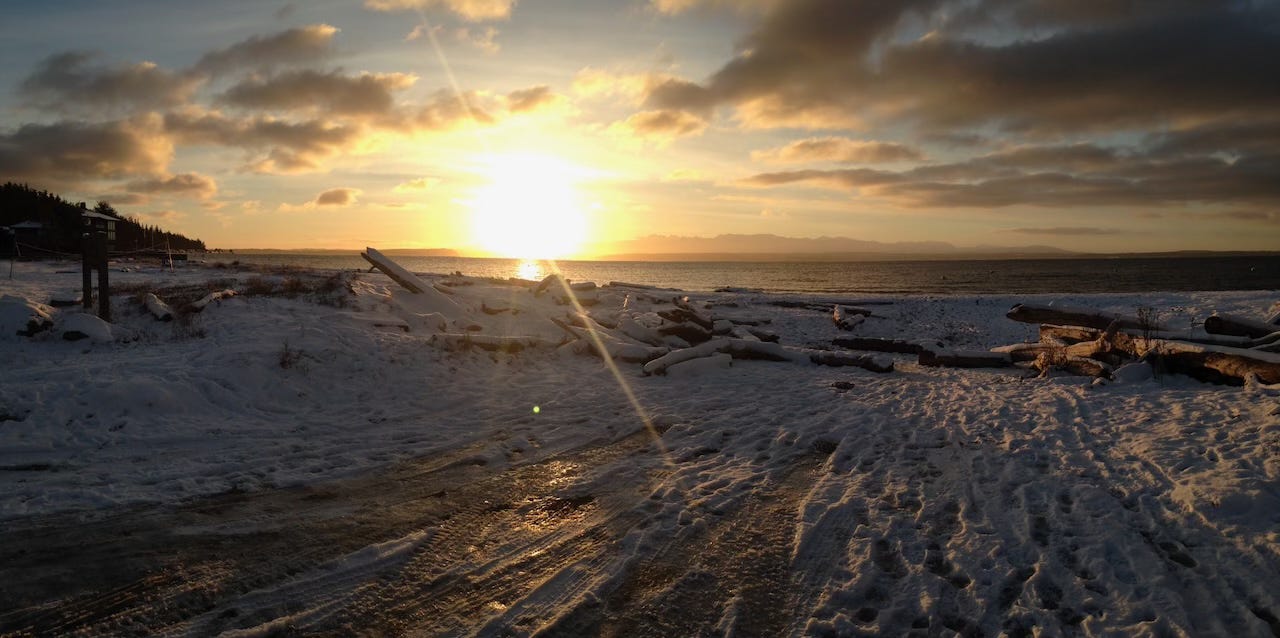
Life, a human life, is endless beginnings and endings until the end, it seems. Life, in general, emerged billions of years ago, shaping the world, enduring millions of extinctions and speciations, and will until - the death of our star? Or maybe sooner? This was the theme of my reflections and contemplations around solstice time - beginnings and endings, not total extinction. My Schumacher Wild adventures came to a close, and indeed, my time with Schumacher College also came to a natural transition. There are other things. I’m just the age of an elder and feeling the pressure to learn how to be a good one before time’s up. There are lives beyond my life heading off in all directions. With endings come new beginnings and new possibilities. That’s just how it is.
My work is about ‘system change’, I think. But the POTUS is way upstream undertaking rapid systems change at national and intercontinental scale. What am I to make of my contributions to ‘the dawn of a new day’ in the face of that dark power, and the growing cohort of Fascist enablers, the Cloud Lords and their AI Surveillance States, the Global Bankers, the Land Grabbers, the Polluters, and all the rest hellbent to warp the system in their financial/ideological interest. Our situation on this planet seems to be getting worse in almost every important measure.
I’m taking a long moment to reassess and look around for wisdom. I’ve gone back to the beginning, sort of. Wild, whole, and free. This is straight from Gary Snyder, one of my poet philosopher heroes since way back. Growing up in California (thank you Mom and Dad!) was a blessing. I’ve had many ‘peak experiences’ in the mountains, at the coast, in the ocean, in the creeks, literally hugging redwood trees, losing myself in surreal desert lake beds gazing at the cosmos. The depth of feeling connected to all life and the universe also deepened my disappointment in modern society. This was when I was turned on to Gary Snyder’s work by a dear professor. Earth Household wore a hole in my back pocket that year. He gave words to my feelings and courage to my own intuitions. Peak experiences in the wilderness and the feelings of connection to everything should be common, easily available to everyone. Yes! Feelings of connection shape our ethical concerns and motivate our politics, too.
In the essay, “The Etiquette of Freedom”, Snyder explains how wildness, wholeness and freedom are deeply interrelated, expressing somehow the ineffable condition in which we find ourselves and its implications.
“To be truly free one must take on the basic conditions as they are—painful, impermanent, open, imperfect—and then be grateful for impermanence and the freedom it grants us. For in a fixed universe there would be no freedom. With that freedom we improve the campsite, teach children, oust tyrants. The world is nature, and in the long run inevitably wild, because the wild, as the process and essence of nature, is also an ordering of impermanence…
“Wilderness is a place where the wild potential is fully expressed, a diversity of living and nonliving beings flourishing according to their own sorts of order. In ecology we speak of ‘wild systems.’ When an ecosystem is fully functioning, all the members are present at the assembly. To speak of wilderness is to speak of wholeness. Human beings came out of that wholeness, and to consider the possibility of reactivating membership in the Assembly of All Beings is in no way regressive...
“To resolve the dichotomy of the civilized and the wild, we must first resolve to be whole.”
Gary Snyder
The Practice of the Wild (1990)
These beautiful passages sum up the work of our time. But really, this is the work of being human, I think, going all the way back. Our earliest hominin ancestors would have cared for their campsites and settlements, passed down the wisdom accumulated through study, reflection and experience, and ‘ousted tyrants’ through exile or worse.
Taking care of our home entails understanding our interrelationships with the rest of the natural world. In the broadest sense this includes our technologies and bureaucracies, some of which are extremely damaging to life of all kinds including our own. What kind of organisms are we, implicated in a planetary-scale web of life and chemistry, dependent on many life forms and each other? Let’s figure that out and organise societies in ways that are flourishing for ourselves and the whole Assembly everywhere we call home.
The evolutionary journey of our genus, homo, has led to our intelligence and awareness grasping - imperfectly, incompletely - that we live in a vast universe. We’re plausibly connected to everything in it, from the dandelion pushing its head up through the pavement to the oldest most distant quasar. We’re implicated in spacetime, as well as our earthly web of life. In our modern global culture, it’s plausible that billions of us have images in our minds of our planet seen from the moon and from the edge of the solar system. Almost every culture, from now going all the way back, has reflected connectedness and relationship with the natural world. They would have developed explanations for how things are and why things change. Modern global culture has the potential to reflect deep connectedness and relationship with the natural world. Modern global culture has produced an enormous set of evidence-based explanations for the phenomena of the natural world, astounding in its scope, depth, practical application. It’s plausible that people in modern global culture can feel deep connection to life, the universe and everything, and yet, in my experience, it is not so common.
It seems we have much to experience and learn. There’s more to consider. There are determined efforts to stop global heating but average global temperatures continue to rise. The implications are frightening and we’re not very well prepared for what’s coming. We, while we’re still here, our children, their children, and so on, will need to deal with increasing numbers of crises of various scale and duration - political, economic, ecological, technological. What knowledge is needed now and in the coming decades? What knowhow? More importantly, what kind of character is called for that can ‘take on the conditions as they are’ and act as the situation demands? How might we imbue our peers and our young with intelligence, wisdom, and courage to work together to make the changes required, sooner rather than too late?
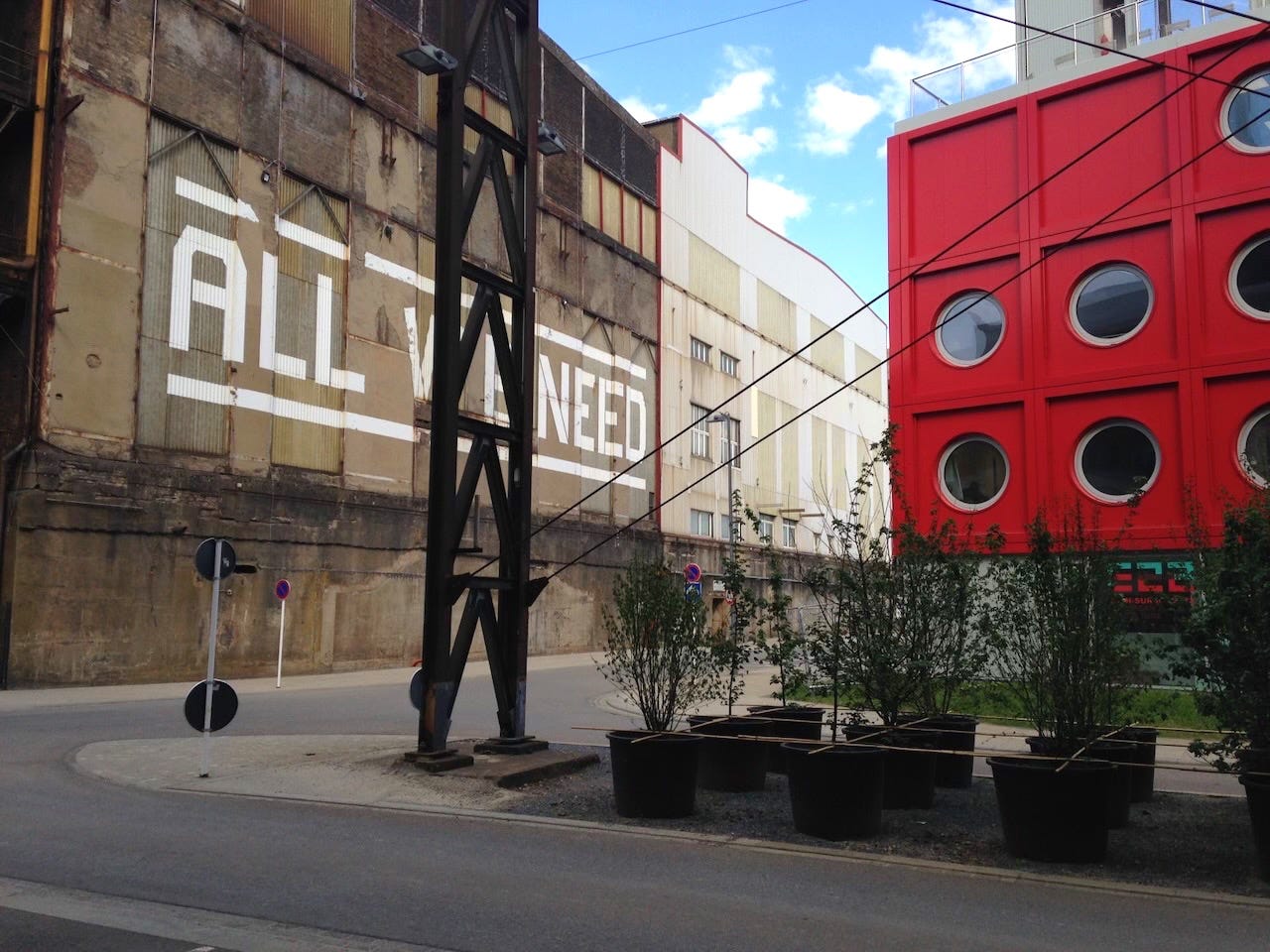
Our political and economic systems are overabundant with tyrants, grandiose and petty, inside and outside governments and corporations, threatening everything and feeding off the fear they engender. They’re unaccountable, maybe unstoppable, and their various projects seem aimed at dystopia for the many, utopia for the few. They’re people, just like everyone else. Perhaps they have a different relationship to the natural world, a different relationship to life. Maybe this gets to the heart of the dichotomy that must be resolved? That would be too tidy a story. In any case, is it possible to resolve these issues without killing each other? Through dialogue and mass civil disobedience? Somehow, if we must become whole in order ‘to resolve the dichotomy of the civilized and the wild’, it must require investing ourselves in renewing, maybe reinventing, democracy and citizenship. Collectively, do we have the character for that?
Wise people these days are saying that we need the poets now more than ever. I agree, and many others are needed, too. There’s a role for everyone if we’re to fill up our assembly. I’m not a utopian, nor a dystopian, but more interested in the next steps and adjacent possibilities, which the artists and poets may detect before the rest of us. What is our line of work in these times? The present is impermanent and the future is open. Gratitude to Gary Snyder for reminding us of these precious gifts.